 Saha Textile
Saha Textile
Saha Textile
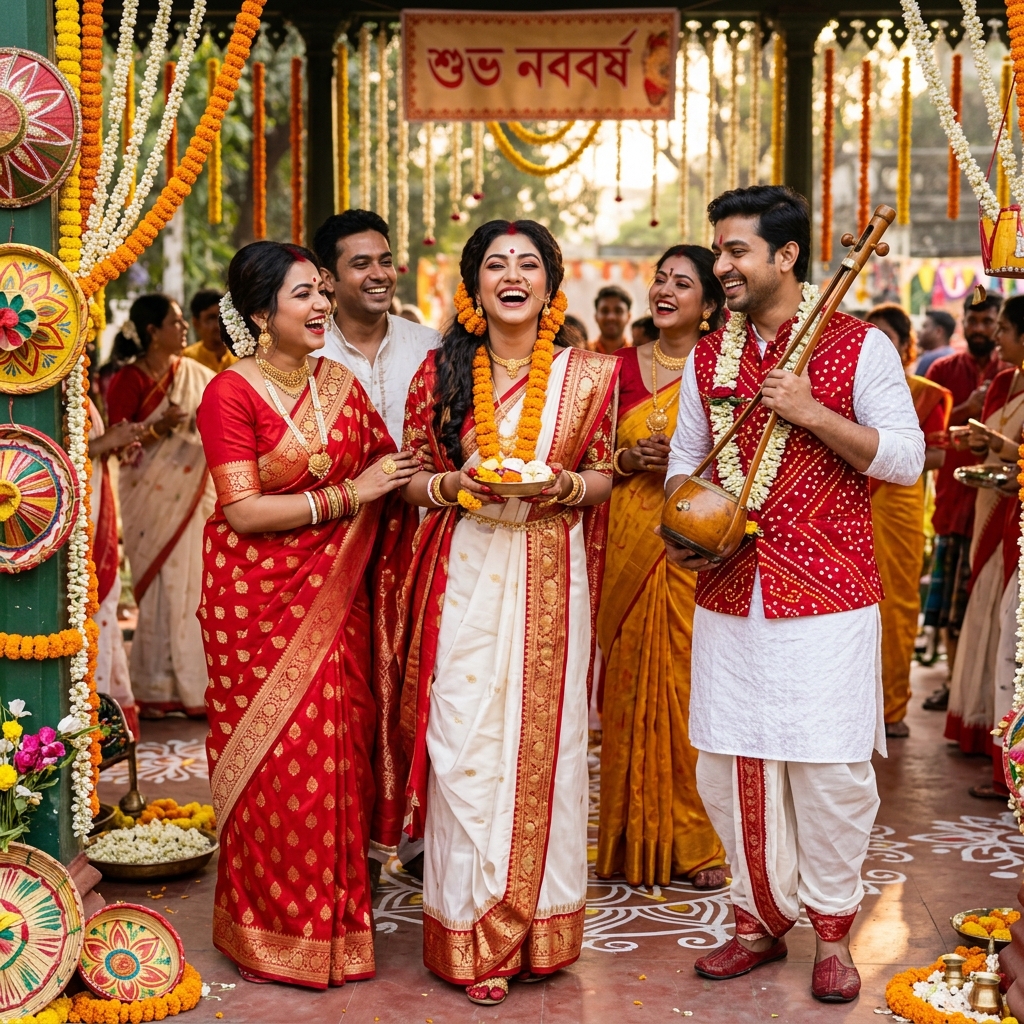
A handloom saree carries the imprint of human hands. You can see it in the slight irregularity of the weave, the texture that no machine can replicate, the way the pallu falls with a weight that feels alive. In Bengal, handloom weaving is not merely a craft. It is a inheritance — passed from father to son, from mother to daughter, from one generation of weavers to the next. When you wear a genuine handloom saree, you are not just wearing cloth. You are wearing a piece of someone's life, someone's skill, someone's heritage.
For handloom lovers in Tripura, finding authentic Bengali weaves locally has always been a challenge. The markets of Agartala and Udaipur sell many things, but genuine handloom from Shantipur, Phulia, Dhaniakhali, and Bishnupur is rarely among them. That is why Saha Textile now offers handloom sarees online with delivery in Tripura. We ship directly from our showroom at Champadali, Barasat, West Bengal, bringing the authentic handloom experience to Bengali families across the border.
Important: Saha Textile does not have a physical store in Tripura. We are based in Barasat, West Bengal, and ship handloom sarees to Tripura through reliable courier services. This page is for customers in Tripura who want to order authentic Bengali handloom sarees online and have them delivered to their address.
Saha Textile was founded in 1986 with a simple mission: to connect Bengali weavers with Bengali wearers. Our founder believed that the weavers of Shantipur, Phulia, and Dhaniakhali deserved fair prices for their work, and that Bengali women deserved access to genuine handloom without paying boutique markups. This mission has guided us for nearly four decades.
Our handloom journey began with cotton. We would travel to Shantipur before dawn, meet the weavers as they opened their looms, and select the best pieces from the previous night's work. The weavers appreciated that we paid immediately, in cash, without the delays and deductions that middlemen often imposed. In return, they gave us their finest work. That relationship — built on respect and fairness — continues to this day.
Our connection to Tripura began in the early 2000s, when a Bengali family from Agartala visited relatives in Barasat and discovered our shop. They bought handloom cottons and a Baluchari, took them back to Tripura, and showed them to their friends. The friends wanted to buy. But they could not travel to Barasat. So we started shipping. One package at a time. One satisfied customer at a time. Today, we regularly deliver handloom sarees to Agartala, Udaipur, Dharmanagar, Kailasahar, Belonia, and beyond.
We have never opened a branch in Tripura. We have never advertised there. Our Tripura customers find us through word of mouth — a cousin in Kolkata who recommends us, a neighbor who received a Saha Textile package and was impressed by the quality. This organic growth is the best testament to the authenticity of our handloom collection. When a customer in Agartala tells her sister in Dharmanagar about us, she is not reading from a marketing script. She is speaking from experience.
Our Tripura handloom customers have refined tastes. They know what they want, and they can tell the difference between genuine handloom and machine-made imitation. Here is what we have observed about their preferences:
Durga Puja is the most important festival for Bengali families in Tripura, and the handloom tant saree is central to the celebration. Our Tripura customers typically order their Puja handlooms by August, allowing time for delivery. Over the years, we have noticed that many customers preparing for Durga Puja prefer lightweight handloom tant sarees because they combine comfort with traditional Bengali styling. The Garad tant — white with red border — remains the most requested piece. But we also see growing demand for handloom cottons from Dhaniakhali and Shantipur, which are practical for the warm October days.
The Baluchari handloom from Bishnupur is one of Bengal's most prized weaves. The pallu woven with mythological scenes — Rama and Sita, Krishna and Radha, scenes from the epics — transforms a saree into a canvas. Our Tripura bridal customers often choose Baluchari for the Bou Bhat or as a gift to the groom's mother. A bride from Agartala who ordered a Baluchari from us last year told us that her mother-in-law wept when she saw it. Not because it was expensive, but because it was genuine. Because it carried the soul of Bengal in its threads.
Tripura's summers demand breathable clothing, and handloom cotton is the natural choice. Our Shantipur and Dhaniakhali handloom cottons are particularly popular among Tripura customers for this season. The handloom weave creates tiny air pockets in the fabric that machine weaving cannot replicate. The result is a saree that stays cooler for longer. A teacher from Dharmanagar who orders her summer handlooms from us every year says she can feel the difference within minutes of draping. The handloom cotton breathes. The power-loom cotton suffocates.
Jamdani is the crown jewel of Bengali handloom. Each motif is woven by hand, without any mechanical aid, creating patterns of extraordinary delicacy. Our Jamdani customers in Tripura tend to be collectors — women who understand that a genuine Jamdani is not just a purchase but an acquisition. They buy one or two pieces a year, often for special occasions. A retired government officer from Kailasahar has been building a Jamdani collection from us for over a decade. She says that wearing a Jamdani in Tripura, where genuine handloom is rare, makes her feel connected to a tradition that transcends borders.
Tripura has its own textile traditions, and local markets offer plenty of options. So why do handloom enthusiasts in Tripura order from a shop in Barasat? Here is what they tell us:
The biggest challenge for handloom lovers in Tripura is finding the real thing. Local markets often sell power-loom imitations labeled as "handloom style" or "handloom look." These might appear similar in photographs, but the difference becomes obvious the moment you touch the fabric. A genuine handloom has weight, texture, and character. Our Tripura customers trust us because we source directly from weavers. There is no ambiguity. No imitation. Just authentic handloom, shipped from the loom to your door.
Many of our Tripura customers are conscious consumers. They know that the handloom industry in Bengal is struggling. Weavers are leaving their looms for construction work and daily labor. Traditional skills are disappearing. By ordering genuine handloom from us, our Tripura customers directly support the weavers of Shantipur, Phulia, Dhaniakhali, and Bishnupur. A customer from Agartala told us that she pays a little extra for handloom because she knows the difference goes to the weaver, not a middleman. That is the kind of customer we are proud to serve.
Handloom is not a product you buy on impulse. It requires understanding. What is the difference between Shantipur and Phulia cotton? Which Baluchari motif is appropriate for a wedding? How do you care for a Jamdani? Our Tripura customers call us with these questions, and we answer them. We send photos. We describe textures. We explain origins. A bride from Udaipur once spent three days on WhatsApp with us, narrowing down her bridal handloom choices. When the saree arrived, she said it was exactly what she had imagined. That level of personal service is only possible when the seller truly understands the product.
Handloom sarees are delicate. A Baluchari with its intricate pallu cannot be folded carelessly. A Jamdani with its fine motifs needs protection. We pack every handloom saree with the care it deserves. Butter paper wrapping. Sturdy boxes. Extra padding for silk pieces. For our Tripura customers, we add moisture-absorbent packets to protect against humidity during transit. When you open a Saha Textile package, the saree looks as fresh as it did in our showroom.
We partner with courier services that deliver across Tripura. Every handloom shipment comes with a tracking number. You can follow your saree from Barasat to Agartala, from our hands to yours. If there is a delay, we tell you. If there is a problem, we fix it. We have been shipping to Tripura for over fifteen years. We know the routes. We know the challenges. And we know how to get your handloom saree to you safely.
Shipping handloom sarees to Tripura has given us unique insights into the handloom culture of our neighboring state. Here is what we have learned:
Our Tripura handloom customers prefer personal interaction over automated websites. They want to talk about the weave, understand its origin, and see multiple photos before deciding. A collector from Agartala might exchange twenty messages with us before choosing a single Jamdani. A bride from Dharmanagar might call three times to discuss her options. We welcome this. Handloom is not a commodity. It is a conversation between the weaver, the seller, and the wearer. We are honored to be part of that conversation.
Tripura's Bengali community maintains a strong cultural identity, and handloom is an important part of that identity. During Durga Puja, families want genuine Garad tant, not imitations. During weddings, they want Baluchari that carries the prestige of Bishnupur. Our Tripura customers see handloom as a way of staying connected to Bengal — a tangible link to the land, the language, and the traditions they cherish. When we ship a handloom saree to Agartala, we are not just sending fabric. We are sending a piece of Bengal.
Bengali weddings in Tripura are elaborate affairs that demand multiple handloom pieces. The bride might want a Baluchari for the Bou Bhat. The groom's mother might need a Katan silk handloom for the reception. The bride's sisters might want matching handloom cottons for the pre-wedding rituals. Our Tripura wedding orders are often large and carefully planned. A mother from Agartala who ordered her daughter's wedding handlooms from us last year selected seven pieces over two weeks of phone calls. When the package arrived, she told us it felt like opening a treasure chest.
Beyond Durga Puja, we see handloom orders for Poila Baisakh, Kali Puja, and Saraswati Puja. Poila Baisakh, in particular, is a time when Bengali families buy new handloom sarees as part of the New Year tradition. Our Tripura customers often order in sets — a handloom for the grandmother, one for the mother, one for the daughter. Each chosen to suit the wearer's age and style. A family from Belonia ordered four handloom cottons from us last Baisakh, one for each generation of women in their household. The youngest chose a Shantipur in peach. The eldest chose a Dhaniakhali in classic white and red. Tradition and modernity, woven together.
For many of our Tripura customers, the ability to order handloom from home is transformative. A working woman in Agartala does not have time to travel to West Bengal for saree shopping. A mother in a remote district cannot leave her family for a shopping trip. Our delivery service brings the handloom showroom to them. They browse through photos, make their selection, and receive their sarees without disruption to their daily lives. This convenience, combined with our authentic collection, is why more and more handloom lovers in Tripura are choosing Saha Textile.
"I have been searching for genuine handloom sarees in Agartala for years. The local shops sell power-loom pieces with 'handloom' labels. Then I found Saha Textile through a relative in Kolkata. I ordered a Baluchari and a Jamdani. When they arrived, I knew immediately they were real. The texture, the weight, the way the light caught the weave — you cannot fake that. I have since ordered five more pieces. My collection is growing, and so is my respect for what these weavers create."
— Dr. Priyanka Deb, Agartala, Tripura
Purchased: Baluchari and Jamdani Handloom Sarees
"My daughter was getting married, and I wanted her to have something truly special — not a machine-made saree from the local market. I called Saha Textile and explained what I needed. They sent me photos of their handloom collection. I chose a Bishnupur Baluchari with the Ramayana woven into the pallu. When it arrived in Udaipur, my daughter cried. She said it was the most beautiful thing she had ever seen. The wedding guests kept asking where we found it. I told them: from Bengal, where these sarees are born."
— Anjali Saha, Udaipur, Tripura
Purchased: Bishnupur Baluchari Handloom for Daughter's Wedding
"I am a handloom enthusiast living in Dharmanagar. There is almost no genuine handloom available here. I discovered Saha Textile online and decided to try ordering. I bought two Shantipur cotton handlooms for daily wear. The delivery took five days, and the packaging was excellent. But what impressed me most was the quality. These were clearly handwoven — you could see the slight variations in the weave, the texture of the hand-spun thread. I have now placed three more orders. Saha Textile has become my only source for authentic Bengali handloom."
— Mitali Choudhury, Dharmanagar, Tripura
Purchased: Shantipur Handloom Cotton Sarees
Common questions about handloom saree delivery to Tripura.
Yes, Saha Textile offers handloom sarees for online ordering with delivery to all districts of Tripura. We ship authentic handloom cotton, silk, Baluchari, and Jamdani sarees from our showroom in Barasat, West Bengal.
We deliver our complete handloom collection to Tripura including Shantipur cotton and silk-cotton, Phulia tant and fine cotton, Dhaniakhali bold-border cottons, Bishnupur Baluchari with mythological motifs, and Jamdani with intricate floral patterns.
All our handloom sarees are sourced directly from traditional weaving clusters in West Bengal. We provide details about the weaving origin with each saree. Our staff can explain the markers of genuine handloom — slight weave irregularities, texture, and reverse-side characteristics — when you call to order.
Call us at +91 8617789846 or message us on WhatsApp. Describe what you are looking for — occasion, budget, preferred weave. We will share photos of matching handloom pieces from our collection. You select, we pack, and our courier delivers to your Tripura address.
Delivery to Agartala takes 3-5 business days. Other districts typically take 5-7 business days. Every shipment includes tracking so you can follow your handloom saree's journey from our loom to your home.
Handloom sarees typically cost more than power-loom equivalents because they require skilled craftsmanship and take longer to produce. However, our direct sourcing from weavers keeps prices fair. Many Tripura customers find our handloom prices comparable to or lower than machine-made 'designer' sarees sold locally.
Yes, we accept returns within 7 days of delivery if the saree is unused and in original condition. For Tripura customers, we arrange reverse pickup. Please contact us to initiate a return or exchange.
Yes, our handloom cotton sarees from Shantipur, Phulia, and Dhaniakhali are ideal for Tripura's warm and humid climate. They are breathable, absorbent, and become softer with each wash. Many Tripura customers specifically request these for daily wear and festival use.
Established in 1986, Saha Textile has served customers across Barasat, Kolkata, West Bengal, and Tripura with authentic Bengali sarees, handloom collections, wedding sarees, and traditional textiles. Our handloom section features genuine weaves from Shantipur, Phulia, Dhaniakhali, and Bishnupur — the traditional heartland of Bengal's handloom heritage. We ship handloom sarees to Tripura because we believe that every Bengali woman, regardless of where she lives, deserves access to the real thing. Not imitations. Not machine-made copies. But the authentic handloom that carries the soul of Bengal in every thread.
Call us or send a WhatsApp message. We will help you find the perfect handloom sarees and deliver them to your doorstep anywhere in Tripura.