 Saha Textile
Saha Textile
Saha Textile
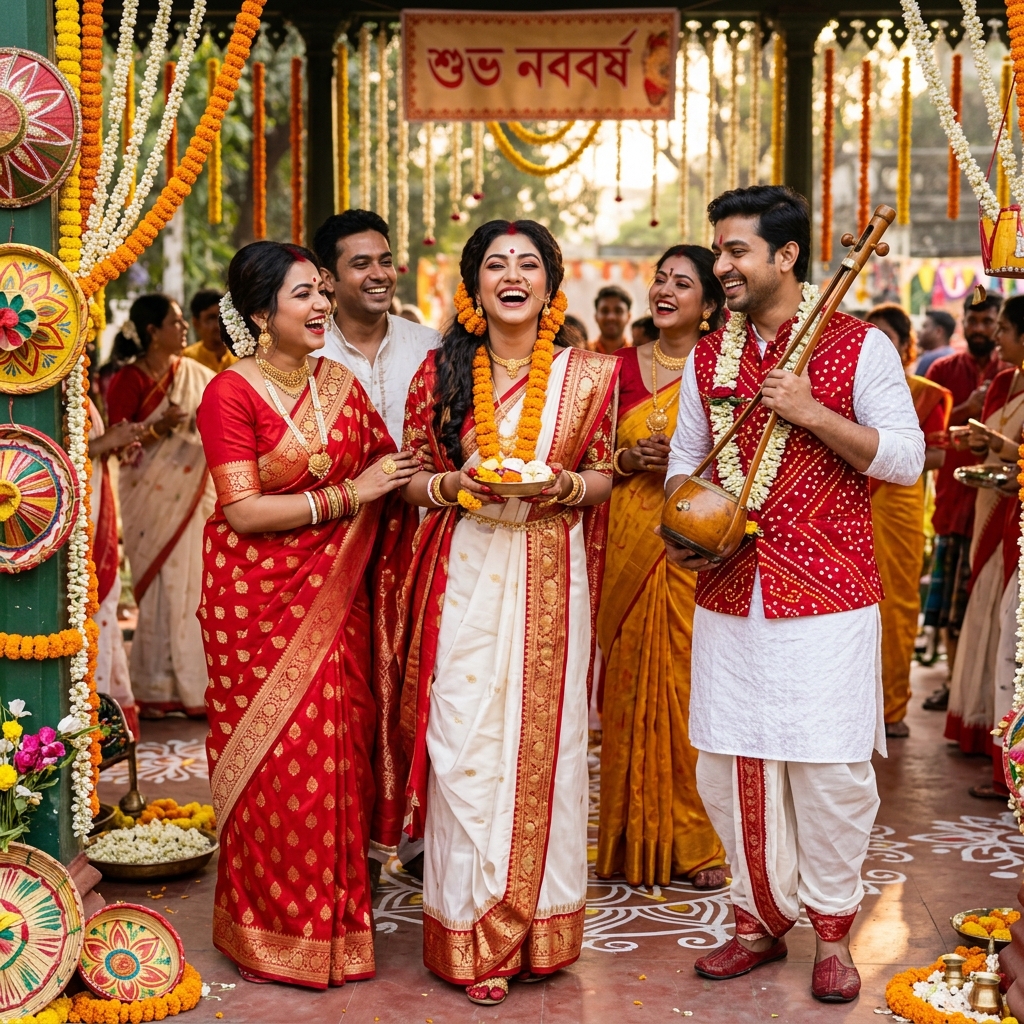
The handloom saree is not just fabric. It is the rhythm of a weaver's shuttle, the patience of hours counted in inches, and the quiet pride of a craft passed from father to son. In Bengal, handloom weaving is not an industry — it is a way of life. And for those who understand this, a power-loom imitation, no matter how perfect, will never feel the same.
If you are looking for a handloom saree shop in Gariahat, you have probably walked past the boutiques on Rash Behari Avenue and wondered which ones sell the real thing. Some do. Many do not. The problem with buying handloom in a busy market is that the seller often does not know — or does not care — whether the saree was woven by hand or churned out by a machine in Surat.
At Saha Textile in Barasat, we have been selling handloom sarees since 1986. We know our weavers by name. We know which cluster produces which weave. We can tell you why a Shantipur cotton feels different from a Phulia cotton, even though both are handloom. And we have customers from Gariahat, Ballygunge, Jadavpur, and Tollygunge who make the trip to Barasat precisely because they want this level of authenticity.
Saha Textile began as a small cloth shop in Champadali, Barasat, in 1986. Back then, handloom was not a marketing buzzword. It was simply how sarees were made. Our founder would travel to Shantipur and Phulia, sit with the weavers, select the best pieces, and bring them back to Barasat on the morning train. The weavers trusted him because he paid fairly and never haggled over prices that were already too low. The customers trusted him because the sarees lasted.
Over the decades, the textile landscape changed. Power looms multiplied. Synthetic fabrics flooded the market. The number of handloom weavers in Bengal shrank. But Saha Textile held its ground. We continued to source from the same weaving families, even when it would have been cheaper and easier to buy machine-made imitations. Our customers noticed. A teacher from Gariahat who bought her first handloom cotton from us in 1994 still visits every summer. She says the sarees she bought thirty years ago are still in rotation.
Today, our handloom collection spans multiple weaving clusters across West Bengal. We work with cooperatives in Shantipur, individual master weavers in Phulia, the bold-border specialists of Dhaniakhali, and the Baluchari artists of Bishnupur. Each relationship has been built over years, sometimes decades. When a weaver in Shantipur has a particularly fine piece, he calls us before anyone else. That is the kind of partnership that produces a collection you cannot find in a typical Gariahat boutique.
Our showroom at Champadali, Barasat, has become a destination for handloom lovers from across Kolkata. We do not advertise much. We do not need to. A customer from Gariahat who discovers our handloom section tells her friends. Her friends tell their neighbors. That is how our South Kolkata customer base has grown — one genuine recommendation at a time.
Handloom customers are different. They do not impulse-buy. They touch the fabric. They hold it up to the light. They ask about the thread count, the dye, the weaver. After nearly forty years of observing handloom buyers, here is what we have learned about our Gariahat and South Kolkata customers:
Every year, starting from late August, our handloom tant section sees a steady stream of customers from South Kolkata. Over the years, we have noticed that many customers preparing for Durga Puja prefer lightweight handloom tant sarees because they combine comfort with traditional Bengali styling. The handloom tant has a crispness that power-loom imitations cannot replicate. It holds its shape through the long hours of pandal hopping. And after the Puja, it softens with each wash, becoming more comfortable with time. Our Gariahat customers often buy two or three — one for Ashtami, one for Nabami, and sometimes a Korial for Dashami.
For Bengali weddings, nothing matches the grandeur of a Baluchari handloom from Bishnupur. The pallu woven with scenes from the Ramayana or Mahabharata, the rich silk thread, the deep colors — it is wearable art. South Kolkata families who value tradition often choose Baluchari for the mother of the bride or as a gift to the groom's mother. We also stock handloom Katan silk, which has a softer drape than power-loom Katan and is preferred by brides who want something luxurious but not overly heavy. A Gariahat customer who bought a Baluchari for her daughter's wedding last year told us the guests kept asking where she found it.
From March to June, the Dhaniakhali handloom cotton section becomes the busiest corner of our showroom. These sarees are woven with thick cotton threads, creating a fabric that is substantial yet breathable. The hallmark of Dhaniakhali is the bold border — often in contrasting colors like red, black, or maroon. Our South Kolkata customers, particularly working women, appreciate these for daily wear. A professor from Jadavpur buys six every summer — enough to rotate through the week without repeating. She says they are the only sarees that keep her comfortable during Kolkata's humid afternoons.
Jamdani is the most intricate of Bengal's handloom weaves. Each motif is woven by hand, thread by thread, without any mechanical aid. The result is a saree with a texture that feels almost three-dimensional. Our Jamdani customers from Gariahat tend to be collectors. They buy one or two pieces a year, usually for special occasions. They know the difference between a Dhakai Jamdani and a Shantipur Jamdani. They ask about the motif density, the thread quality, the time it took to weave. These are not casual purchases. They are investments in a dying art form.
There are plenty of places to buy sarees in Kolkata. So why do handloom enthusiasts from Gariahat travel to Barasat? Here is what they tell us:
We do not buy from wholesalers. We buy from weavers. This means two things: the sarees are genuine, and the prices are fair. A Gariahat boutique might sell a Shantipur handloom cotton for ₹2,500 after marking it up through two or three middlemen. We sell the same saree for ₹1,200 because we bought it directly from the weaver. Our South Kolkata customers have done the math. They know the difference.
Our staff has been trained to identify genuine handloom. They can explain why a particular saree costs what it costs. They can show you the difference between a handloom and a power-loom imitation. They know which weaves are suitable for which occasions. A customer from Gariahat who bought her first Baluchari last year told us she appreciated that our salesperson spent twenty minutes explaining the motifs and their significance. That kind of knowledge is not something you find in a typical retail environment.
Handloom is seasonal. The weavers work in cycles, and new pieces arrive at different times of the year. Our collection reflects this. In January, after the wedding season, we get fresh Baluchari stock. In July, the new cotton harvest brings lighter, brighter pieces from Dhaniakhali. In September, the Puja rush brings the best tant weaves from Phulia. Our regular customers from South Kolkata know these cycles. They time their visits accordingly.
Handloom customers need time. They want to unfold the saree, feel the weight, examine the pallu. We give them that time. There is no sales target driving our staff to push the most expensive piece. If a customer from Gariahat wants to spend an hour comparing three Shantipur cottons, we let her. If she decides not to buy today and come back next week, that is fine too. The saree will still be there. And so will we.
We have never run a newspaper ad targeting Gariahat. We have never put up a hoarding on Rash Behari Avenue. Our South Kolkata customers find us through relatives, colleagues, and friends. A woman from Ballygunge tells her neighbor. The neighbor tells her sister in Jadavpur. The sister brings her daughter. That is how our Gariahat customer base has grown — slowly, organically, and honestly. In the handloom business, there is no better advertisement than a satisfied customer wearing your saree to a family function.
South Kolkata has a distinct relationship with handloom. The neighborhoods around Gariahat, Hindustan Park, and Lake Gardens have long been home to academics, artists, and professionals who value craftsmanship over flash. Here is what we have observed about handloom shopping patterns in this part of the city:
Our Gariahat handloom customers tend to be well-read and well-informed. They know about the Geographical Indication (GI) tags on Bengali weaves. They ask about the Handloom Mark. They want to know if the weaver was paid fairly. Many are conscious consumers who see buying handloom as an ethical choice, not just an aesthetic one. A retired professor from Hindustan Park who visits us twice a year once spent an entire afternoon discussing the decline of the Baluchari weave with our founder. That is the level of engagement we welcome.
While most brides choose Benarasi silk for the main ceremony, an increasing number of South Kolkata families are incorporating handloom into the wedding trousseau. A Baluchari for the Bou Bhat. A Jamdani for the reception. Handloom cottons for the pre-wedding rituals. These choices reflect a desire to honor Bengali tradition while standing out from the standard bridal look. A Gariahat mother who bought three Baluchari sarees for her daughter's wedding gifts told us she wanted something that could not be bought at any mall.
Durga Puja is the peak season for handloom tant in South Kolkata. But we also see spikes during Saraswati Puja, when yellow handloom cottons are in demand, and during Poila Baisakh, the Bengali New Year, when customers buy new sarees as a tradition. Our Gariahat regulars often pre-book their Puja handlooms by July, knowing that the best pieces will be gone by September. One customer from Ballygunge has been buying her Ashtami saree from us for fifteen years. She says it is her way of starting the Puja on the right note.
Bengali weddings follow a specific visual language, and the saree is central to it. Red for the bride. Yellow for the Gaye Holud. White with red border for the elder women. Handloom fits naturally into this palette. A Dhaniakhali cotton with a red border is the traditional choice for the mother of the bride. A Shantipur silk-cotton in cream and gold works beautifully for the reception. Our South Kolkata customers understand these codes. They do not need us to explain them. They need us to provide the right saree at the right quality.
Perhaps the most encouraging trend we have seen is the growing number of young women from Gariahat and South Kolkata in their twenties and thirties who are discovering handloom. They come with their mothers or grandmothers, learn to identify genuine weaves, and develop their own preferences. Some prefer the minimalism of a plain Shantipur cotton. Others are drawn to the drama of a Baluchari. Either way, they are keeping the tradition alive. And that, for us, is the most rewarding part of this business.
"I have been collecting handloom sarees for thirty years. Gariahat has some good shops, but finding genuine handloom has become harder. A friend from Barasat told me about Saha Textile. I was skeptical — a small-town shop with serious handloom? But I went. I spent two hours in their handloom section. I bought a Baluchari, a Jamdani, and three Shantipur cottons. Every single piece was authentic. The Baluchari pallu alone took my breath away. I have been back four times since."
— Dr. Maitreyi Chatterjee, Hindustan Park, South Kolkata
Purchased: Baluchari, Jamdani, and Shantipur Cotton Handlooms
"My mother always bought her handloom sarees from Gariahat. When I got my first job at a school in Jadavpur, I wanted to continue the tradition. But the Gariahat prices were too high for my salary. My aunt suggested Saha Textile. I bought four Dhaniakhali cottons for less than the price of two in Gariahat. The quality was identical — actually, better. The borders were sharper, the fabric softer. Now my mother shops there too."
— Riya Das, Jadavpur, South Kolkata
Purchased: Dhaniakhali Handloom Cotton Sarees
"For my daughter's wedding, I wanted something truly special — not another Benarasi from a Gariahat boutique. A colleague mentioned Saha Textile's Baluchari collection. I drove to Barasat with my daughter and mother-in-law. We found a deep maroon Baluchari with the Ramayana woven into the pallu. It was exquisite. The price was half what a Gariahat shop quoted for a lesser piece. My daughter wore it for the Bou Bhat, and every guest asked where we found it."
— Sharmila Bose, Gariahat, South Kolkata
Purchased: Bishnupur Baluchari Handloom for Daughter's Wedding
Common questions about handloom sarees from Gariahat customers.
Saha Textile in Barasat offers authentic handloom sarees sourced directly from weaving clusters in Shantipur, Phulia, Dhaniakhali, and Bishnupur. Many customers from Gariahat and South Kolkata visit our showroom for genuine handloom at fair prices.
Genuine handloom sarees have slight irregularities in the weave, a distinct texture from hand-operated looms, and often show small thread knots on the reverse side. At Saha Textile, our staff will gladly show you these markers of authenticity.
We stock Shantipur cotton and silk-cotton, Phulia tant and fine cotton, Dhaniakhali bold-border cottons, Bishnupur Baluchari with mythological motifs, and Jamdani with intricate floral patterns. Each comes from its traditional weaving cluster.
Handloom sarees typically cost more than power-loom equivalents because they take longer to weave and require skilled craftsmanship. However, at Saha Textile, our direct sourcing keeps prices reasonable. A genuine handloom cotton from us often costs less than a machine-made 'designer' saree from a Gariahat boutique.
Yes, our Shantipur and Phulia cotton handlooms are extremely popular among working women from South Kolkata. They are lightweight, breathable, and come in subtle colors and patterns that are appropriate for professional settings. Many professors, doctors, and office-goers from Gariahat buy these regularly.
Absolutely. Our Baluchari handlooms from Bishnupur, with their intricate mythological scenes woven into the pallu, are prized as bridal and gift sarees. We also have handloom Benarasi-style pieces and Katan silk handlooms suitable for wedding ceremonies.
Handloom cottons should be washed separately in cold water with mild detergent. Avoid wringing. Dry in shade. For silk handlooms, dry cleaning is recommended. Store folded with neem leaves or silica gel to prevent moisture damage. Our staff provides care instructions with every purchase.
Yes. We have built relationships with weaving cooperatives and individual master weavers across West Bengal over decades. By buying from us, you support these artisans and their families. Many of our Gariahat customers specifically choose handloom for this reason.
Established in 1986, Saha Textile has served customers across Barasat, Kolkata, and West Bengal with authentic Bengali sarees, handloom collections, wedding sarees, and traditional textiles. Our handloom section features sarees from Shantipur, Phulia, Dhaniakhali, Bishnupur, and other weaving clusters across Bengal. We believe that every handloom saree carries the imprint of the weaver's hands — and that is something no machine can replicate.
Make the trip from Gariahat to Barasat and experience handloom sarees the way they were meant to be — genuine, fairly priced, and full of character.