 Saha Textile
Saha Textile
Saha Textile
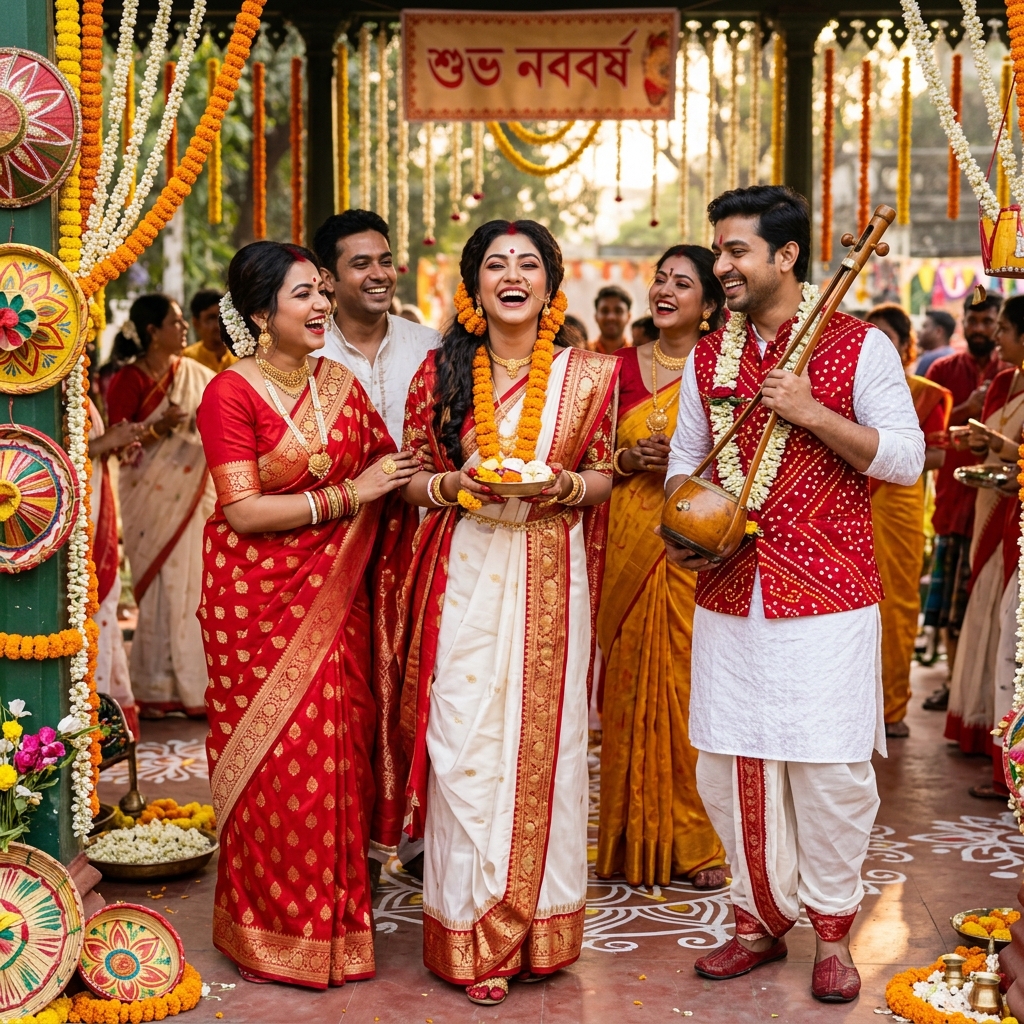
There is a sound that every Bengali woman recognizes — the crisp rustle of a new tant saree being unfolded. It is the sound of Durga Puja mornings, of Ashtami anjali, of mothers and daughters getting ready together before the pandal. The tant saree is not merely clothing in Bengal. It is a cultural signature, a statement of identity, and for many families, a tradition passed down through generations.
If you are searching for a tant saree shop in Gariahat, you are probably preparing for something important. Perhaps it is Durga Puja, and you need that perfect white Garad with the red border. Perhaps it is a family wedding, and you want a Korial that will photograph beautifully. Or perhaps you simply appreciate the lightweight comfort of a well-woven tant for Kolkata's humid days.
At Saha Textile in Barasat, we have been selling tant sarees since 1986. Our collection comes directly from the weaving clusters of Shantipur and Phulia in Nadia district — the heartland of Bengal's tant production. We serve customers from Gariahat, Ballygunge, Jadavpur, Tollygunge, and across South Kolkata who have learned that the best tant sarees are not always found in the most expensive boutiques.
When Saha Textile opened its doors in Champadali, Barasat, in 1986, tant sarees were already the backbone of our business. The founder had spent months building relationships with weavers in Shantipur, learning the difference between a good tant and a mediocre one. He discovered that the quality of a tant saree depends on three things: the cotton thread, the tension of the loom, and the skill of the border weaver. A slight variation in any of these, and the saree loses its character.
Back then, our customers were mostly local women from Barasat and nearby villages. They bought tant sarees for daily wear, for pujas, for weddings. The prices were modest. A good tant saree cost less than a week's groceries. But the weavers were paid fairly, and the customers got genuine quality. That formula — fair price, genuine quality, honest business — has not changed in nearly four decades.
Sometime in the mid-1990s, word reached South Kolkata. A customer from Gariahat who had married into a Barasat family discovered our tant collection during a visit. She bought a dozen sarees — gifts for her mother, sisters, and aunts back in Ballygunge. They loved them. She returned the next month with her neighbors. That is how our South Kolkata tant customer base began — not through advertising, but through the simple power of a good product finding its audience.
Today, our tant section occupies the largest area of our showroom. We stock hundreds of designs at any given time, from simple daily wear pieces to elaborate Garad and Korial sarees for special occasions. Our weavers in Shantipur and Phulia know our standards. They save their best pieces for us. And our customers from Gariahat know that when they buy a tant from Saha Textile, they are getting the real thing — woven in Bengal, by Bengali weavers, for Bengali women.
Tant customers are some of the most loyal we have. Once a woman finds a tant saree she loves, she comes back for more. She knows what she wants. She knows what works for her body, her lifestyle, and her occasions. Here is what we have observed about tant buying patterns among our Gariahat and South Kolkata customers:
There is no bigger event on the Bengali calendar than Durga Puja, and there is no saree more associated with it than the white Garad tant with its red border. Every year, from late August through September, our Garad and Korial section becomes the busiest corner of the shop. Over the years, we have noticed that many customers preparing for Durga Puja prefer lightweight tant sarees because they combine comfort with traditional Bengali styling. A Garad tant allows a woman to participate in the anjali, walk through crowded pandals, and sit on the floor for pushpanjali — all without feeling weighed down.
Our South Kolkata customers tend to be particular about the shade of white and the width of the border. Some prefer a pure snow white. Others like a slightly off-white or cream tone. The border color varies too — bright red, deep maroon, or even black for a modern twist. We keep all variations in stock during Puja season. A Gariahat customer who has bought her Ashtami Garad from us for twelve years once told us that the first thing she does after buying is send a photo to her daughter in the US. It has become part of their Puja ritual.
While silk dominates the bridal ceremony, tant has its place in Bengali weddings too. The Gaye Holud ceremony often calls for yellow or off-white sarees, and a light tant with gold border work fits beautifully. Tant sarees are also popular as gifts — the mother of the bride might give tant sarees to relatives, or the groom's family might present them to the bride's female relatives. Our South Kolkata customers often buy tant in bulk for weddings — ten, fifteen, sometimes twenty pieces at a time. We prepare these orders in advance, ensuring each piece meets our quality standard.
From March through June, when Kolkata's heat becomes unbearable, the demand for daily wear tant sarees spikes. These are simpler pieces — single-color or lightly striped, with minimal border work. They are worn to work, to the market, to visit relatives. Our South Kolkata working women buy them by the half-dozen. A professor from Jadavpur University told us she rotates through seven tant sarees during the summer, one for each day of the week. They are easy to wash, quick to dry, and comfortable enough to wear through a full day of classes.
Some of our Gariahat customers do not wait for a festival. They buy tant sarees throughout the year, collecting different colors, border styles, and weave patterns. One customer from Tollygunge has over a hundred tant sarees in her wardrobe. She can tell you which one she wore to which occasion going back twenty years. For these collectors, tant is not just clothing. It is a hobby, a passion, and a connection to Bengali culture that they refuse to let fade.
Gariahat has no shortage of saree shops. So why do tant lovers from South Kolkata make the trip to Barasat? Here is what they tell us:
We do not buy tant sarees from distributors or wholesalers. We buy directly from the weavers in Shantipur and Phulia. This means our customers get fresher stock, better prices, and the assurance that the saree was woven in its traditional home. A Gariahat boutique might sell a Shantipur tant that has passed through three middlemen. We sell the same saree with one less markup. Over a purchase of ten sarees, that difference adds up to significant savings.
Our tant section is extensive. Garad in every shade of white and border red. Korial with broad and narrow borders. Daily wear tants in solid colors, stripes, and checks. Festive tants with zari work. Contemporary tants in unconventional colors like teal, mustard, and lavender. We even stock the rare "Bhomra" tant with its distinctive temple border. A customer from Gariahat who visited for the first time last year said she felt like a child in a sweet shop — too many choices, each one better than the last.
A good tant saree should last for decades. The cotton should not thin out after a few washes. The border should not fray. The color should not fade into a dull grey. We test our tant stock for these qualities before putting it on display. A Gariahat customer once brought in a tant saree she bought from us in 1998. It had been washed hundreds of times. The white had softened to cream. But the border was intact, the fabric was strong, and she still wore it every Durga Puja. That is the standard we aim for.
South Kolkata boutiques charge premium rents, and those costs get passed to the customer. We operate from Barasat, where overheads are lower. The result: our tant sarees are priced 20-35% below comparable Gariahat shops. A Garad tant that costs ₹1,800 in Gariahat might cost ₹1,200 here. For a family buying Puja sarees for four women, that difference is substantial. Our customers know this. They do the math. And they keep coming back.
Our staff does not just sell tant sarees. They understand them. They can tell you which weave is best for which body type. They can recommend a border width that complements your height. They know which tants drape well and which ones hold their starch longer. A young woman from Gariahat who was buying her first Garad for Durga Puja last year had no idea what to choose. Our salesperson spent forty minutes with her, explaining the options, showing her how each one looked when draped. She left with two sarees and a confidence she did not have when she walked in.
South Kolkata has a unique relationship with the tant saree. In neighborhoods like Gariahat, Ballygunge, and Jadavpur, the tant is not just festive wear — it is everyday elegance. Here is what we have learned about tant shopping patterns in this part of the city:
Our Gariahat tant customers span every age group. Grandmothers who have worn tant all their lives and will not consider anything else. Mothers who balance tradition with practicality. Young women in their twenties who are rediscovering the tant as a statement of Bengali identity. What unites them is an appreciation for authenticity. They can tell the difference between a Shantipur tant and a power-loom imitation from Surat. They know that the real thing costs more than ₹300. And they are willing to pay for quality.
While the bridal ceremony saree is usually silk, tant plays an important role in the broader wedding shopping. The Gaye Holud often calls for a light yellow or cream tant. The pre-wedding rituals might require white or off-white pieces. And gift sarees for female relatives are frequently tant — practical, beautiful, and culturally appropriate. South Kolkata mothers who are outfitting their daughters' weddings often buy a dozen or more tant sarees from us, mixing Garad, Korial, and daily wear pieces for different recipients.
Durga Puja is the peak, but it is not the only festival that drives tant sales. Saraswati Puja in January-February creates demand for yellow and white tants. Poila Baisakh, the Bengali New Year, sees families buying new tant sarees as part of the tradition. Kali Puja and Diwali bring requests for darker, more festive colors. Our Gariahat regulars often plan their festival shopping months in advance, knowing that the best pieces disappear quickly.
Bengali weddings follow a visual code, and tant is woven into it. The elder women of the family often wear white tant with red borders to the wedding ceremony — a mark of their status and tradition. The bride's mother might wear a Korial for the reception. The groom's mother might choose a Garad for the Bou Bhat. These are not random choices. They are part of a cultural language that South Kolkata families understand instinctively. We respect these traditions and help our customers find the right tant for each role.
Perhaps the most heartening trend we have seen is the resurgence of tant among young South Kolkata women. Women in their twenties and thirties who grew up seeing their mothers and grandmothers in tant are now embracing it themselves. But they want something fresh — a Garad in pastel pink instead of traditional red. A Korial with a geometric border instead of the classic stripe. A daily wear tant in mint green or coral. Our weavers have responded to this demand, and our collection now includes contemporary designs alongside the classics. A young professional from Gariahat who bought her first "modern" tant from us last year now owns seven. She says it is her way of being Bengali without being boring.
"I have been buying my Durga Puja Garad from Gariahat for fifteen years. Last year, a relative suggested Saha Textile in Barasat. I was hesitant — why travel so far for a tant saree? But I went. I found a Garad that was crisper, whiter, and better woven than anything I had bought in Gariahat. And it cost four hundred rupees less. I bought three — one for me, one for my sister, one for my mother. This year, we are all going together."
— Madhuri Ghosh, Gariahat, South Kolkata
Purchased: Garad Tant Sarees for Durga Puja
"As a school principal in Jadavpur, I wear sarees every day. Summers in Kolkata are brutal, and tant cotton is the only thing I can bear. I used to buy from Gariahat, but the quality kept declining while prices rose. A colleague told me about Saha Textile. I now buy all my summer tants from them — usually six at a time. They last for years, stay crisp after washing, and the colors do not fade. The staff even remembers which colors I prefer and sets aside new stock for me."
— Soma Banerjee, Jadavpur, South Kolkata
Purchased: Daily Wear Tant Cotton Sarees (Annual Collection)
"For my daughter's wedding, I needed gift sarees for twelve female relatives. I wanted something traditional but practical — tant seemed perfect. I went to three Gariahat shops and got quotes that were absurdly high. Then I remembered a friend mentioning Saha Textile. I drove to Barasat and bought fifteen tant sarees — a mix of Garad, Korial, and daily wear — for less than the Gariahat quote for ten. The quality was better too. My relatives still ask where I found them."
— Ananya Sen, Tollygunge, South Kolkata
Purchased: Tant Saree Collection for Wedding Gifts
Common questions about tant sarees from Gariahat customers.
Saha Textile in Barasat offers authentic tant sarees sourced directly from Shantipur and Phulia weaving clusters. Many customers from Gariahat and South Kolkata visit our showroom for genuine tant sarees at fair prices.
Garad tant is a white saree with a red or maroon border, traditionally worn during Durga Puja. Korial is similar but features a broader border and is considered slightly more formal. Both are quintessential Bengali tant weaves from the Shantipur-Phulia region.
We stock both handloom and power-loom tant sarees, clearly labeled and priced accordingly. Our handloom tants come from traditional weavers in Shantipur and Phulia. Our power-loom tants are high-quality machine-made options for customers who want the tant look at a lower price point.
Our tant sarees start from ₹450 for basic power-loom daily wear pieces and go up to ₹2,500 for premium handloom tants with intricate borders. Garad and Korial tant sarees for Puja typically range from ₹800 to ₹1,800 depending on the border work and fabric quality.
Yes, our Durga Puja tant collection is our biggest seasonal offering. We stock hundreds of Garad, Korial, and festive tants in white, red, and gold combinations. Many South Kolkata families buy their Ashtami and Nabami sarees from us every year.
Tant sarees should be washed in cold water with mild detergent. Do not wring. Dry in shade to prevent the border colors from fading. Starch lightly for the crisp look that tant is known for. Store folded with the border visible to prevent creasing.
Every tant saree comes with a matching blouse piece. For Garad and Korial tants, the blouse piece is typically in the border color — red or maroon. We also keep contrast blouse materials if you prefer a different look.
Authentic tant cotton may shrink slightly after the first wash — typically 1-2 inches. Our staff advises customers to buy with this in mind. The shrinkage is minimal after the first wash, and the saree actually becomes softer and more comfortable with each subsequent wash.
Established in 1986, Saha Textile has served customers across Barasat, Kolkata, and West Bengal with authentic Bengali sarees, handloom collections, wedding sarees, and traditional textiles. Our tant saree section features authentic weaves from Shantipur and Phulia — the traditional home of Bengal's tant production. We believe that every tant saree carries the spirit of the weaver and the culture it represents.
From Gariahat to Barasat — discover authentic tant sarees at prices that respect your budget and your tradition.