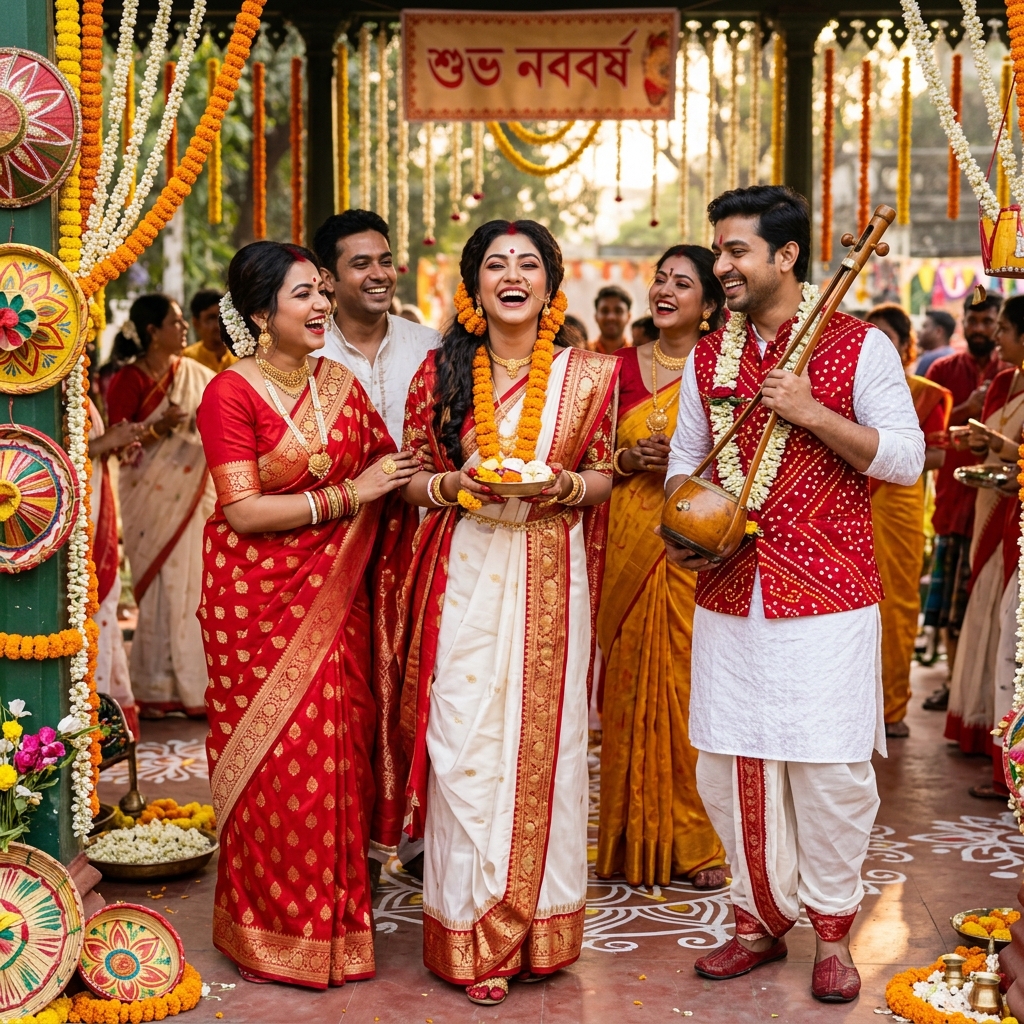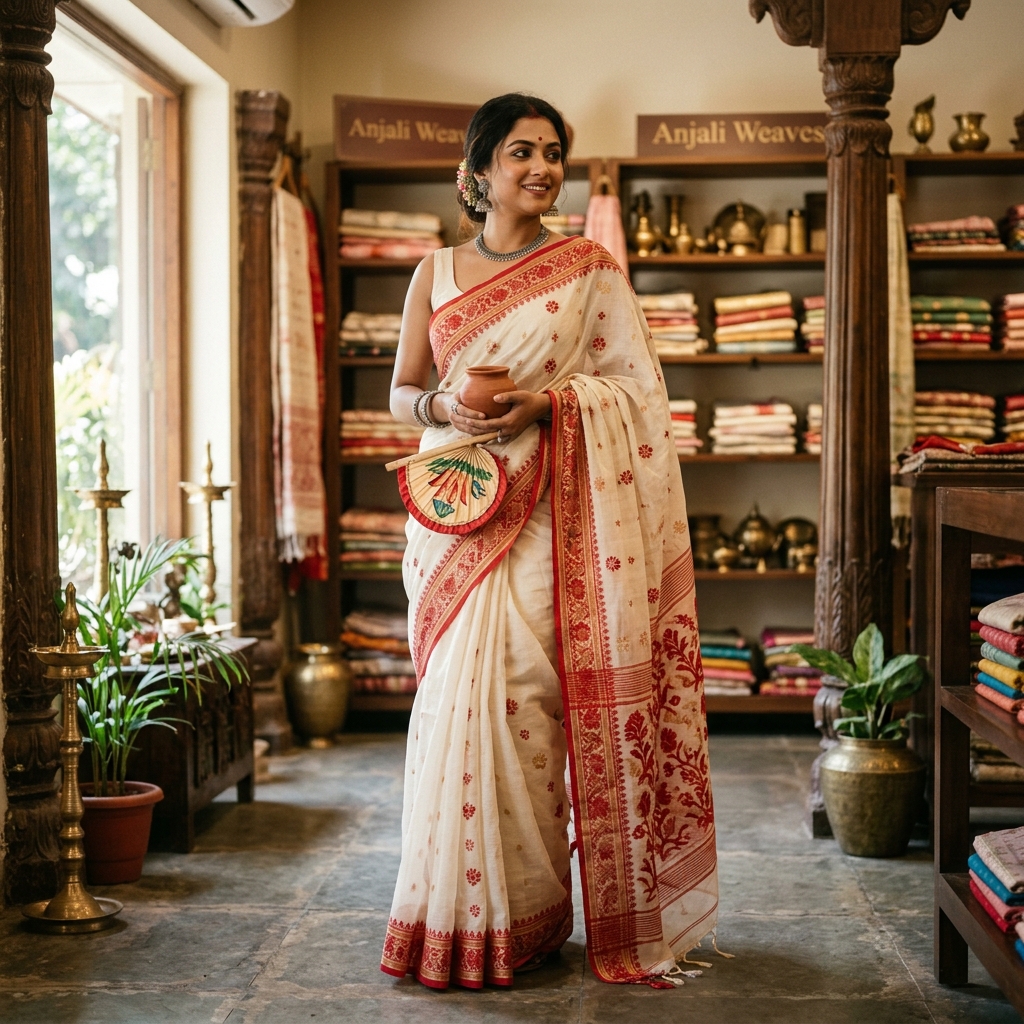

Explore our exquisite collection of Banarasi Silk sarees, perfect for the grand celebrations of life.
Updated: June 2026 When it comes to weddings and grand festivals in Bengal, nothing matches the opulence and grandeur of a Banarasi Silk saree. However, local markets are increasingly flooded with "surat-made" synthetic duplicates passed off as hand-woven originals. At Saha Textile, located at the Champadali crossroads in Barasat, we have spent forty years safeguarding our community from these counterfeit goods. Since 1986, we have sourced our masterworks directly from certified weaver cooperatives in Varanasi, ensuring uncompromised purity for your lifelong bridal memories. This comprehensive guide details the historical roots, identification criteria, and precise styling methods for genuine handloom Banarasi silk sarees. The art of genuine Banarasi weaving dates back to the Mughal era, when Persian artistic motifs were blended with traditional Indian design sensibilities to create luxury textiles. Unlike mass-produced machine variants, an authentic handloom Banarasi silk saree can take anywhere from 15 days to 6 months to complete on a traditional pit loom, depending entirely on the complexity of the pattern structural blueprint. True artisan pieces feature intricate, hand-guided layouts including detailed floral motifs, kalga (paisley variations), bel (creeper patterns), and jhallar (ornate net-like structures) that are woven meticulously with fine gold and silver zari threads into premium quality mulberry silk. Before investing a significant portion of your wedding budget, our senior store curators advise running these three critical technical quality checks directly on the fabric: Flip the saree over to inspect the reverse side of the woven design. A genuine hand-loomed Banarasi saree will show prominent floats, loose thread gaps, and tiny irregular knots where the artisan manually tied off the colored bobbins. If the reverse side feels perfectly smooth, flat, or shows uniform mesh grids, it is an imitation product of an automated powerloom machine. Pure mulberry silk has a distinct, deep luster that shifts elegantly under lighting, and the saree holds a reassuring, natural weight due to the density of raw organic threads. While we do not recommend burning retail items, a single stray thread pulled from a genuine silk saree will burn with the smell of charred hair and leave a powdery, crumbly ash. Synthetic polyester duplicates melt into a hard plastic bead and smell chemically sweet. Authentic Banarasi sarees use tested zari or real silver-plated copper threads that retain their brilliant metallic luster over decades. Inspect the edge of the zari motifs; genuine hand-woven zari will feel soft and pliable to the touch. If the metallic thread feels scratchy, exceptionally stiff, or turns black quickly when exposed to air, it indicates cheap plastic-wrapped metallic yarn. Styling a heavy Banarasi silk saree for your wedding or a festive occasion requires a careful balance of traditional elements: Because genuine Banarasi sarees are intended to be passed down as family heirlooms across multiple generations, strict maintenance is required to prevent fabric dry-rot and zari tarnishing:The Ultimate Banarasi Silk Saree Guide: Spotting Authentic Handloom Luxury for Your Wedding
The Mughal Heritage and Mechanical Time Investment
3 Expert Tests to Spot a Genuine Handloom Banarasi Silk Saree
The Reverse Side "Floats" and Knot Test
The Pure Silk Burn Test and Weight Profile
The Zari Scratch and Color Integrity Check
Ceremony Styling: Letting the Fabric Lead
Preservation Protocol: Protecting Your Heirloom Textile
Action Type
The Professional Handloom Care Standard
Washing Method
Always choose premium, specialized professional dry cleaning. Avoid home washing machines completely.
Accidental Spill Care
Never scrub a stain. Blot immediately with clean tissue and take it to an expert dry cleaner within 24 hours.
Storage Medium
Wrap the saree individually inside a breathable, unbleached white muslin or cotton cloth bag. Never use plastic covers.
Long-Term Upkeep
Unfold the saree, air it out in a shaded indoor room for a few hours, and re-fold it along fresh crease lines every 4 to 6 months.