
Celebrate the New Year with the finest ethnic wear from West BengalÔÇÖs trusted retailer.
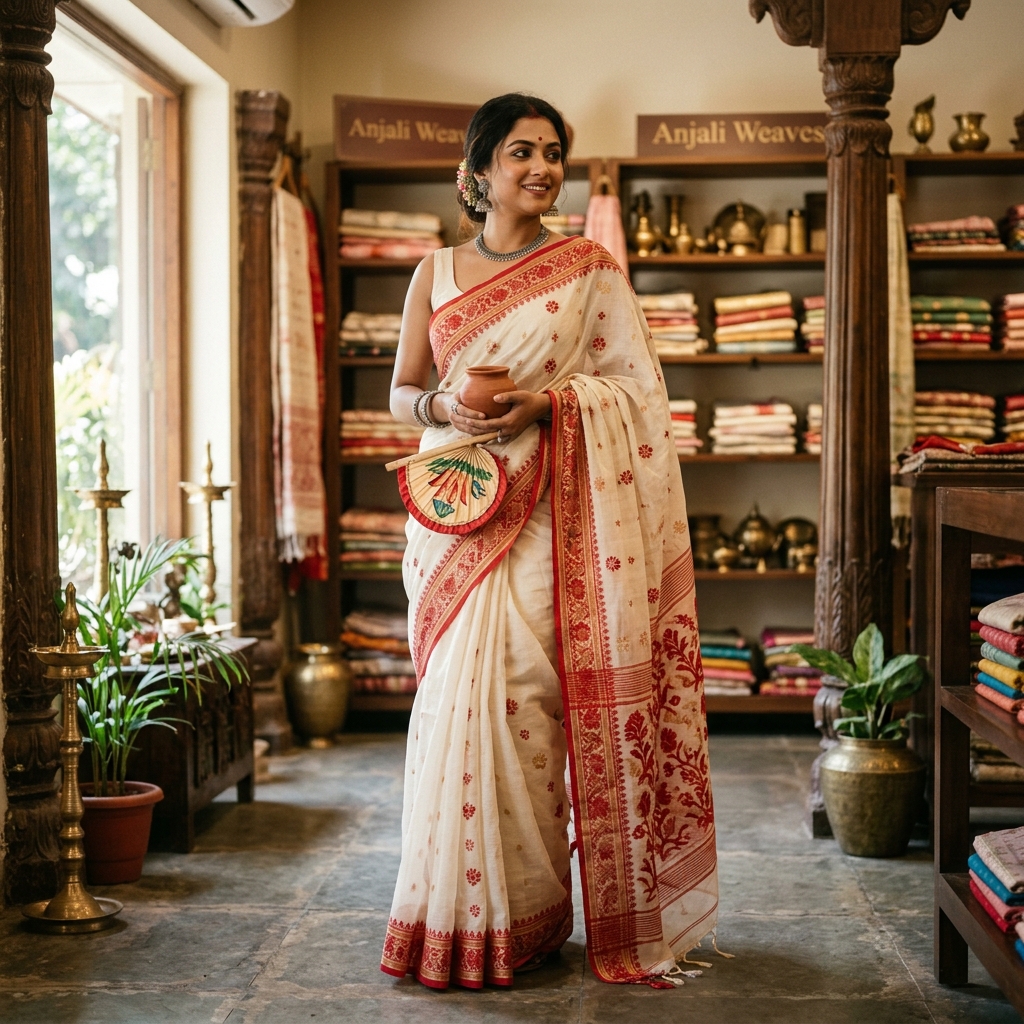
Updated: June 2026 Poila Baisakh marks a profound moment of cultural renewal, prosperity, and ancestral pride across West Bengal. Welcoming the Bengali New Year with a pristine, unblemished wardrobe (Nutan Jama) is a centuries-old custom designed to attract positive energy for the year ahead. However, navigating local celebrations comfortably requires garments specifically engineered to handle Bengal's intense April climate. At Saha Textile, trusted by families since 1986, our festive collection highlights breathable, hand-loomed heritage fabrics that respect traditional aesthetics while providing optimal thermodynamic relief. Whether you are attending a morning puja or an evening cultural function, this authoritative guide details the critical textile selections for the entire family, backed by over forty years of retail curation experience at our Barasat and Kolkata outlets. For Bengali women, the ultimate expression of Poila Baisakh fashion is the classic white or off-white saree featuring a vibrant red border (paar). Genuine hand-woven cotton Tant sarees from regional clusters like Dhaniakhali or Shantipur are highly recommended for daytime rituals. "Authentic handloom Tant possesses a highly specialized, open-weave structure that allows fresh air to circulate directly through the fabric grid," explains Subrata Saha. "This creates a natural cooling effect that machine-made powerloom copies simply cannot replicate, as high-speed industrial rollers compress the yarn too tightly, creating a heavy heat-trap." For formal morning pujas or high-status family gatherings, pure Garad silk stands as an unrivaled benchmark of purity. Characterized by its un-dyed, natural silk body and solid crimson borders, genuine Garad silk holds a distinctive, paper-like crisp structure that maintains its pristine geometric silhouette beautifully throughout long daytime ceremonies. Men can elegantly complement their partner's look by choosing a premium handloomed Tussar Silk Panjabi (kurta) paired with a traditional cotton or silk Dhuti. True Tussar silk is highly prized for its natural rich golden sheen, deep texture, and exceptional durability, making it an excellent long-term investment for festive calendars. Before finalizing your holiday purchases, our showroom floor consultants recommend executing these three rigorous quality checks directly on the counter: Flip the saree or Panjabi border over to inspect the underside. A genuine hand-loomed garment will show visible, tiny, irregular extra-weft yarn loops and small knots where the artisan manually tied off thread bobbins. If the pattern is perfectly uniform, flat, and identical on both sides, it is a synthetic machine-made imitation. Press an unstarched, interior section of the cotton or silk fabric directly against the skin of your inner arm. Pure natural fibers like organic flax linen, authentic mulberry silk, and hand-spun cotton conduct heat away rapidly, feeling instantly cool and refreshing. Synthetic polyester blends, by contrast, adjust to room temperatures and feel dry, static-prone, or slightly warm upon contact. Premium handloom textiles and luxury silks should feature proper administrative hallmarks. When investing in fine festive wear, always look for the official Handloom Mark or the Silk Mark tags issued by the Ministry of Textiles, Government of India. Authentic showrooms will showcase these quality assurances transparently. April in Bengal brings peak humidity levels that can permanently damage delicate silk and organic cotton fibers if stored incorrectly. Protect your investment using our verified conservation matrix:The Poila Baisakh Sartorial Registry: Authentic Handloom Heritage for the Bengali New Year
The Festive Wardrobe: Culturally Significant Weaves
1. Traditional Tant Sarees (The Core Classic)
2. Premium Garad Silk (The Sacred Heirloom)
3. Tussar Silk Panjabis & Dhutis (The Men’s Standard)
The Curator’s Audit: 3 Verification Tests for Holiday Shopping
The Reverse Border Check (The "Khut" Test)
The Temperature Conductivity Check
The Government Label Verification
The Humid Weather Preservation Protocol
Textile Class
Immediate Post-Wear Care
Long-Term Storage Protocol
Festive Cotton & Tant
Air the fabric on a padded hanger in a well-ventilated, shaded indoor room for 4–6 hours to evaporate body moisture.
Execute a gentle manual hand wash with mild detergents. Lightly starch, iron while damp, and wrap individually in unbleached cotton.
Garad, Tussar, & Banarasi Silk
Never wash at home or expose to direct sunlight. Hang immediately in a cool room to allow sweat to dissipate completely.
Send exclusively to professional dry cleaners. Store wrapped inside a breathable muslin cloth bag with silica gel packets to block humidity.