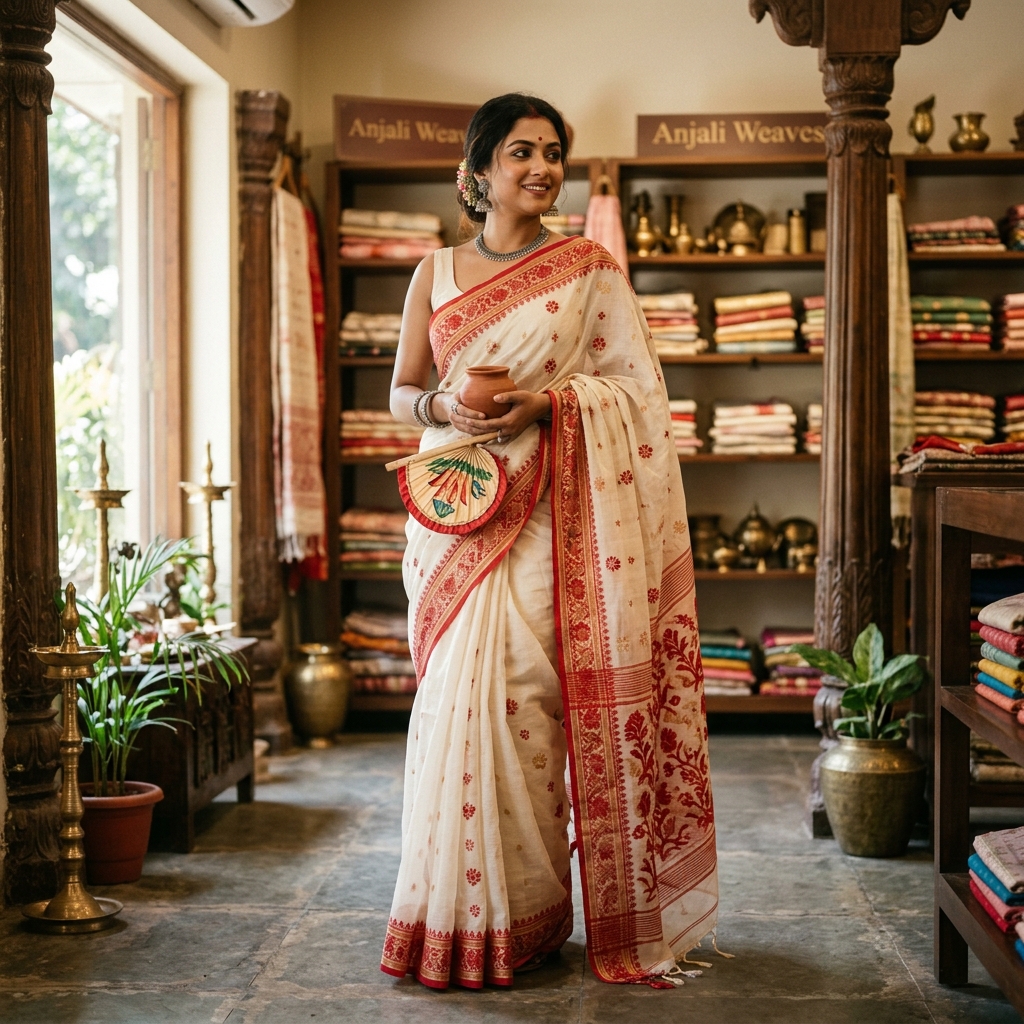
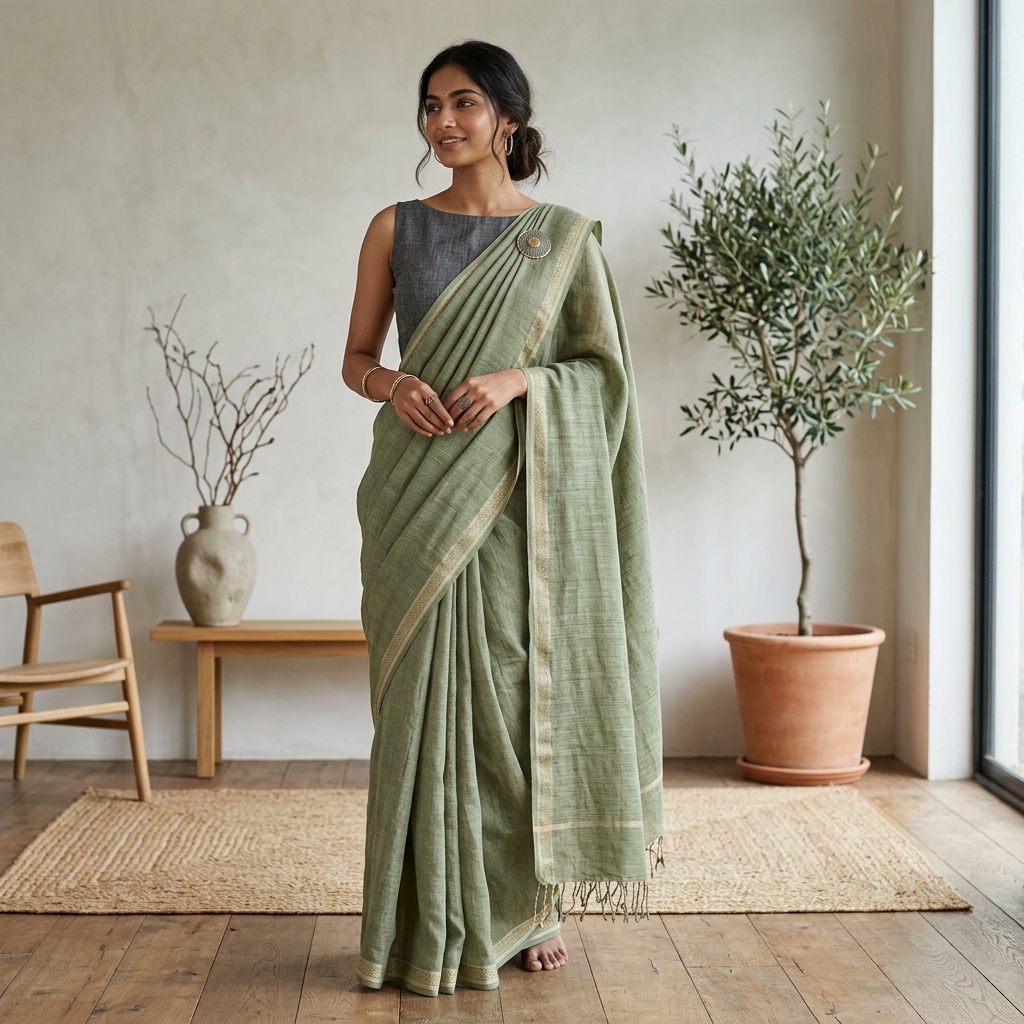
Linen is the new favorite for the modern workspace. Experience the fusion of tradition and contemporary style.
Updated: June 2026 Our premium Linen collection is designed specifically for the modern professional who refuses to compromise on either physiological comfort or contemporary style. Linen successfully bridges the gap between traditional ethnic drape mechanics and contemporary fashion aesthetics by combining the organic texture of natural flax fibers with sophisticated layouts. At Saha Textile, located at the Champadali crossroads in Barasat, our curated linen sarees are lightweight, exceptionally easy to manage, and available in a refined palette of sophisticated pastels and bold hues perfect for workspaces and casual social environments. Since 1986, our multi-generational retail house has prioritized sourcing directly from certified weaver cooperatives. This authoritative guide breaks down the physical properties of flax-based textiles, provides technical quality validation metrics, and details the correct maintenance protocols to ensure your investment lasts for decades. Linen stands as one of the oldest recorded textiles in human civilization, celebrated for its structural coolness and rapid moisture-wicking capabilities in peak tropical weather. Unlike mass-produced synthetic materials, genuine linen is woven from natural cellulose fibers extracted from the stem of the flax plant (Linum usitatissimum), rendering the final garment completely eco-friendly and biodegradable. The core structural profile of a high-utility linen saree rests on its signature tactile grain—initially crisp and substantial, yet softening dynamically with each successive wash cycle. This material features a subtle, organic luster that delivers an understated elegance impossible to replicate with automated powerloom synthetic imitations. As the regional demand for linen grows, cheap polyester-viscose blends are frequently mislabeled as pure flax to maximize profit margins. Our senior showroom curators recommend executing these three quality-assurance tests directly on the fabric panel: Examine the fabric surface closely under a soft, natural light source. Authentic handloomed linen features characteristic, random small lumps in the yarn called "slubs." These micro-variations are natural signatures of the organic flax harvesting process. If the fabric surface looks flawlessly smooth, flat, or displays uniform synthetic grid lines, it is an imitation machine-woven synthetic polymer product. Grip a panel of the open saree. Premium-grade flax linen feels reassuringly substantial and has a distinct weight profile, yet it remains incredibly thin and breathable when draped. If a saree feels flimsy, paper-thin, or holds a slick, static-prone silkiness, it has been heavily blended with cheap synthetic nylon yarns that will trap body heat during Kolkata's humid summer months. Press an unstarched interior panel of the saree firmly against your forearm. Pure flax fibers possess high natural heat conductivity, meaning the fabric will instantly feel cool and refreshing against the skin. Synthetic polyesters, conversely, adapt rapidly to ambient temperature and will feel warm, dry, or slightly irritating upon initial contact. Linen sarees offer elite structural adaptability across professional workspaces, high-stakes presentations, and travel itineraries when balanced with minimal, calculated accessorizing: To preserve the natural absorbency, organic luster, and structural tensile strength of your linen sarees over decades of frequent use, adhere to this precise preservation routine:The Modern Linen Saree Blueprint: Sourcing and Styling Eco-Friendly Corporate Drapes
The Flax Heritage: Why Linen Excels in Humid Climates
3 Technical Inspections to Spot Authentic Premium Linen
The Slub and Weave-Density Audit
The Substantial Weight vs. Thickness Balance
The Cool-Touch Thermal Response
The Corporate and Travel Styling Playbook
The Technical Care Protocol: Maximizing Flax Longevity
Care Step
Operational Standard
Laundering Method
Machine wash on a short, gentle cycle using cold water, or execute a light manual hand wash. Utilize only mild, non-alkall liquid detergents.
Chemical Restriction
Strictly avoid commercial fabric softeners, chemical bleaching agents, or blueing liquids. Fabric softeners coat the natural flax fibers, severely reducing their breathability.
Drying Sequence
Do not wring or twist the fabric aggressively. Gently press out excess moisture and line dry the saree flat in an indoor, well-ventilated, shaded area.
Ironing Strategy
For a crisp corporate look, iron the saree while it is still slightly damp using a high-heat steam setting. Alternatively, leave it unironed to leverage the organic, relaxed look.